Cooling Tower Cleaning 101: What Denver Building Managers Need to Know
Dirty cooling towers waste energy and can harbor dangerous Legionella bacteria.
Most building managers think about their cooling towers once a year, usually when something goes wrong.
But a neglected cooling tower isn't just an efficiency problem. It's an energy drain, a liability, and in the worst cases, a public health hazard.
Here's what you need to know.
What does a cooling tower actually do?
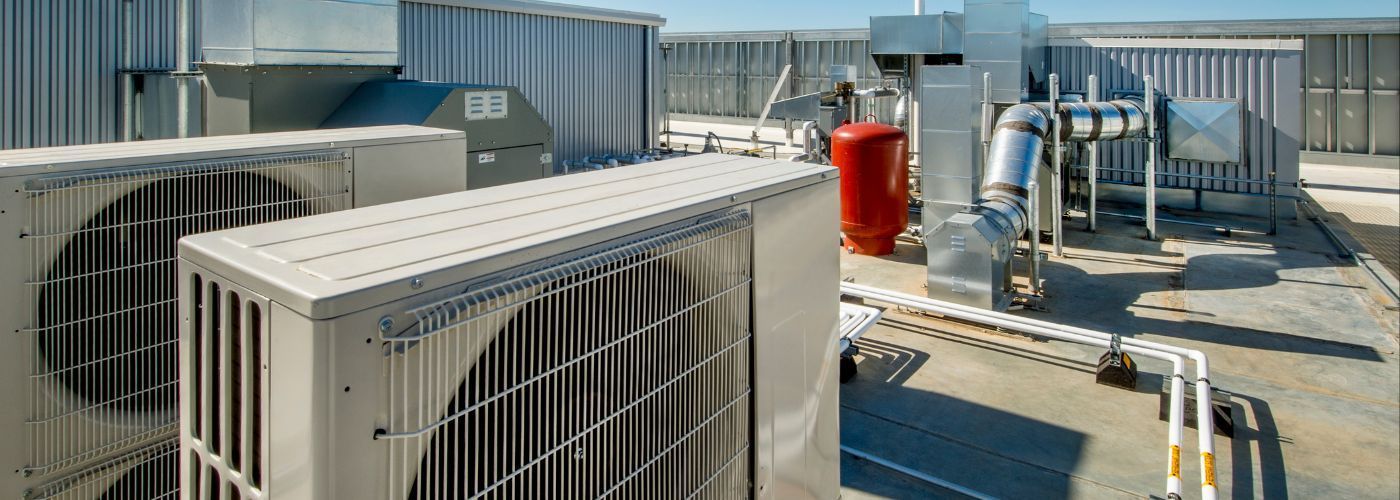
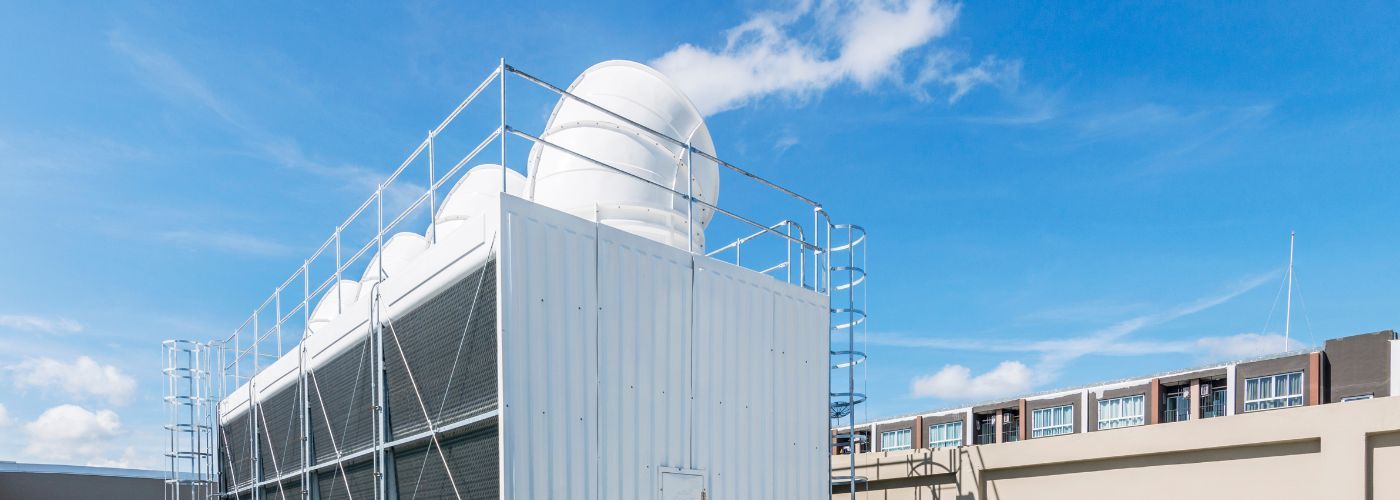
Cooling towers are the workhorses of large commercial HVAC systems. They expel heat from the building's chilled-water loop to the outside environment via evaporation, essentially acting as a giant radiator on your roof.
Without a properly functioning cooling tower, your entire cooling system struggles to keep up, no matter how well the rest of the equipment is maintained.
What builds up inside a cooling tower and why it matters
Over time, three types of buildup accumulate inside commercial cooling towers:
Mineral scale:
Denver's water is moderately hard, meaning dissolved calcium and magnesium deposit on tower surfaces and fill media as water evaporates. Scale acts as insulation on heat transfer surfaces, forcing the system to work harder and consume more energy.
Biological growth: Algae, biofilm, and bacteria thrive in the warm, wet environment of a cooling tower basin. Left unchecked, biological growth clogs fill media and reduces airflow.
Sediment and debris: Cottonwood, pollen, dust, and airborne particulate are facts of life on the Front Range. These materials accumulate in the basin and fill, restricting water flow and accelerating biological growth.
Each of these problems compounds the others. Scale creates surface area for biofilm to attach. Biofilm traps sediment. Sediment insulates surfaces further. The result is a system that runs hotter, harder, and less efficiently with every passing month.
The Legionella Factor: Why cooling towers are a liability issue, not just a maintenance issue
Cooling towers are a potential breeding ground for Legionella bacteria, the cause of Legionnaires' disease, which is acquired by breathing in water droplets contaminated with the bacteria.
When a neglected cooling tower generates contaminated drift, the fine mist of water that escapes into the air, aerosolized bacteria can spread and pose a risk to public health.
How CCER cleans commercial cooling towers
Not all cooling tower cleaning is the same. CCER evaluates each site individually and uses one of two methods, or a combination of both, depending on the type and severity of buildup:
Manual cleaning: Using power washers and shovels to remove sediment, scale, and biological growth from the basin, fill media, drift eliminators, and distribution deck. This is effective for towers with a heavy accumulation of physical debris.
Chemical acid cleaning:
A targeted chemical treatment to dissolve mineral scale and neutralize biological buildup that manual cleaning alone can't reach. Particularly effective for towers with significant scale deposits from Denver's water chemistry.
All rinse water and cleaning chemistry is fully recaptured; nothing is discharged to storm drains. CCER's technicians follow all applicable environmental and safety protocols throughout the process.
How often should your cooling tower be cleaned?
For most commercial buildings in Denver and the Front Range, the baseline is annual cleaning, typically in spring before peak cooling season begins. High-use systems, towers serving large office buildings, hospitals, data centers, or manufacturing facilities, benefit from semi-annual cleaning.
If your tower hasn't been cleaned in more than 12 months, it's overdue. If you're not sure when it was last cleaned, that's an answer enough.
The bottom line
A dirty cooling tower costs you in three ways: higher energy bills, shorter equipment life, and potential exposure to harmful conditions. Annual professional cleaning addresses all three, and CCER's free assessment takes 15 minutes to tell you exactly what your tower needs.
Call (720) 224-3306 or visit hvaccoilclean.com to schedule your free assessment.
Sources: CDC Controlling Legionella in Cooling Towers (cdc.gov); EPA Legionella pneumophila in Cooling Tower Water Guidance (epa.gov); ASHRAE Standard 188-2021; OSHA Legionellosis Outbreak Response Guidelines (osha.gov)
Contact Common Cents Energy Recovery